Quick answer: Sustainable social media growth comes from strategy, not posting more: clear positioning, funnel thinking and purposeful content tied to business goals such as awareness, trust or conversion. The framework pairs organic content with paid boosts, adapts content to each platform, and measures saves, shares, DMs and conversions instead of likes and follower counts.
Key Takeaways
- Posting frequency alone does not improve social media growth anymore. Strategy does.
- Sustainable social media growth comes from positioning, funnel thinking and consistency, not luck.
- Cheap packages almost always fail because they skip strategy entirely.
- A real framework (not a content calendar) is what separates brands that plateau from ones that compound.
- We’ll walk through how this played out with an actual client, mistakes included.
Why Does Posting More Content Stop Working?
I have watched a lot of brands hit a wall. They post daily, sometimes twice a day and their numbers just flatten. It’s not a mystery, honestly it’s a sign they have been optimizing for output instead of outcomes.
Real social media growth does not come from a fuller calendar. It comes from knowing exactly who you are talking to and why they should care. I have sat in enough strategy calls to tell you the brands that break through are not the ones posting the most they are the ones posting with intent. There is a difference and most teams never stop long enough to feel it.
This is not a takedown of consistency. Consistency still matters but consistency without direction is just noise on a schedule.
There is decent research on this if you go looking Sprout Social’s own trend reporting has pointed to the same thing year after year: audiences respond to relevance, not frequency. It’s not a secret. It’s just inconvenient because relevance takes more work than scheduling another post.
What Does Strategic Social Media Growth Actually Mean?
Golden answer: Strategic growth means every post ladders up to a business goal like awareness, trust or conversion, instead of existing just to fill a slot on the calendar. It starts with positioning, not content ideas.
A social media marketing strategy is built backward. You start with what the business needs like more leads, more repeat customers and more category trust and then you figure out what content earns that. Most teams do it forward: brainstorm content ideas first, then hope they add up to something.
Brand positioning is the part everyone skips because it feels slow. But if your audience can not tell you apart from three competitors in one scroll, no amount of posting fixes that. I have seen brands with gorgeous content lose to plainer competitors who simply knew who they were.
I say this to almost every new client in the first meeting: pretty content with no positioning is like a well-dressed person who has nothing to say at a party. People will glance over, sure. They won’t remember you by the time they get to the drinks table.
What Are the Core Pillars of a Sustainable Growth Framework?
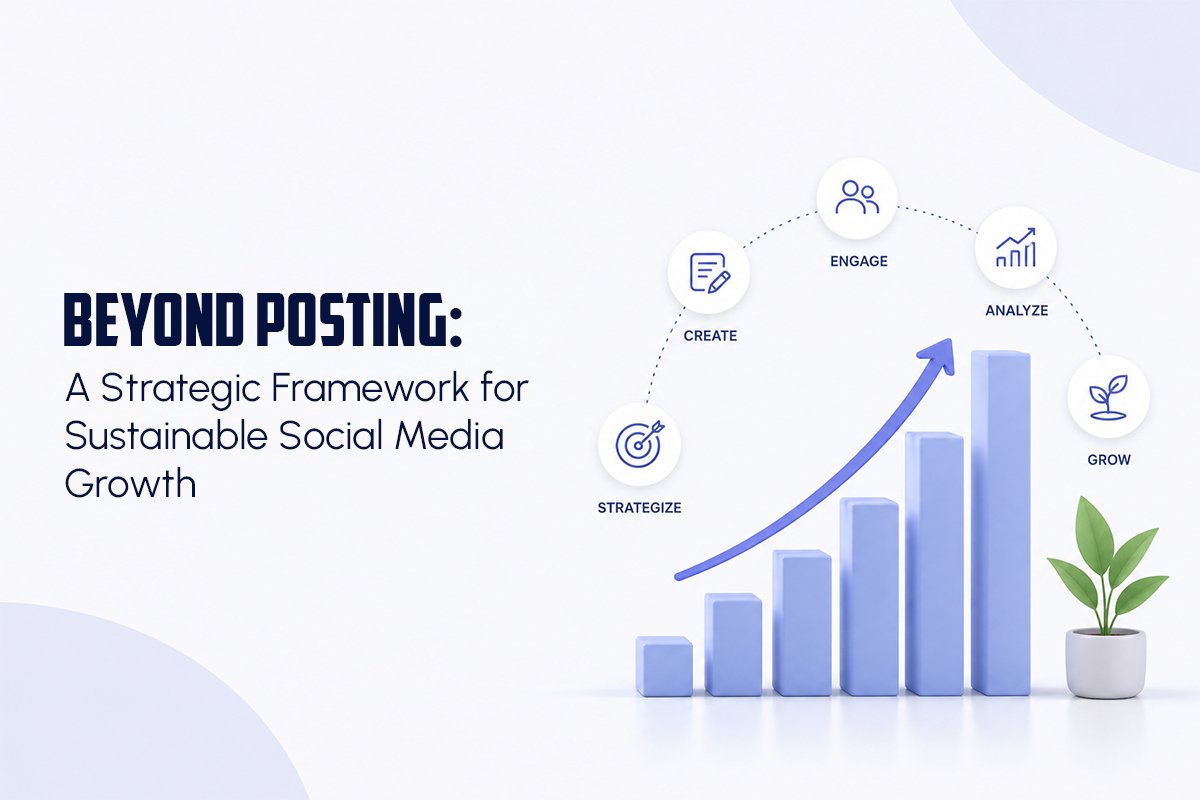
Every sustainable social media growth framework is built on a few core pillars that work together, not in isolation.
How does content fit into the bigger picture?
Your content strategy is not your calendar. It’s the reasoning behind the calendar, the themes, the proof points, the audience questions you are answering on repeat. A calendar without that reasoning is just a to-do list wearing a strategy costume.
Should paid support organic growth?
Yes, almost always. Pairing organic content with smart performance marketing by boosting posts that are already resonating tends to outperform either approach on its own. Organic tells you what’s working; “paid” gives it reach before the algorithm buries it.
Does platform choice matter that much?
More than most brands admit. A framework that ignores platform behaviour is half a framework. Hootsuite platform trend coverage is worth skimming periodically, not because you need to chase every feature update, but because audience habits genuinely shift platform to platform, what lands on LinkedIn will often fall flat, word for word, on Instagram. I have made that mistake myself early on, copy-pasting a caption across three platforms and wondering why one performed and two didn’t.
Where does social growth sit in the marketing funnel?
Social rarely closes a sale on its own. It moves people through the marketing funnel, from “never heard of you” to “actually considers you.” Treating every post like it needs to convert immediately is where a lot of budgets get wasted. We also tightened up their social media marketing cadence. We published fewer posts, but each one had a clearer purpose.
Why Do Cheap Social Media Packages Usually Fail?
Golden answer: Cheap packages fail because they are built for volume, not strategy. They rely on the same templates, same captions, no research into what the audience actually responds to. You end up paying monthly for content that never moves a real metric.
Case Study: What Happened When We Rebuilt a Financial Education Brand’s Social Presence
This one’s a good example because it was not glamorous work. It was slow, deliberate and honestly a little uncomfortable at the start.
A financial education platform came to us posting three times a week, decent design, almost zero traction. Comments were mostly bots. Their old approach treated every platform the same: same graphic, same caption, copy-pasted across Instagram, LinkedIn and X. Nobody was reading it.
We paused posting for close to two weeks. That felt risky and the client said as much. But we needed to understand who was watching. It turned out they were mostly first-time investors, mostly nervous about looking financially illiterate in public. So the tone shifted from “expert lecturing” to “someone explaining it like a friend would.”
We rebuilt the whole approach around real reader questions instead of generic finance tips, leaned into short explainer formats and treated LinkedIn and Instagram as genuinely different rooms with different conversations happening in them. As part of our broader digital marketing services approach.
Within ten weeks, saves and shares had roughly tripled and more importantly to the client, inbound DMs asking about their paid course jumped noticeably. Not because we posted more. Because we finally understood who we were talking to. You can read case study on the Financial Education Platform if you want the numbers.
This is, honestly, the kind of work that happens when a team functions less like a content factory and more like an AI-powered marketing agency. Data informs the decisions, but experienced strategists still make the calls.
None of this came from a template. It came from reading actual comments, noticing which explainer formats got saved versus scrolled past and adjusting weekly instead of quarterly. That’s slower than most agencies want to admit and it’s also the only version of this that actually holds up over time, the kind of steady compounding growth that Google’s own guidance on helpful content has been pointing toward for a while now: content built around real people, not around a search box.
How Do You Actually Measure Social Media ROI?
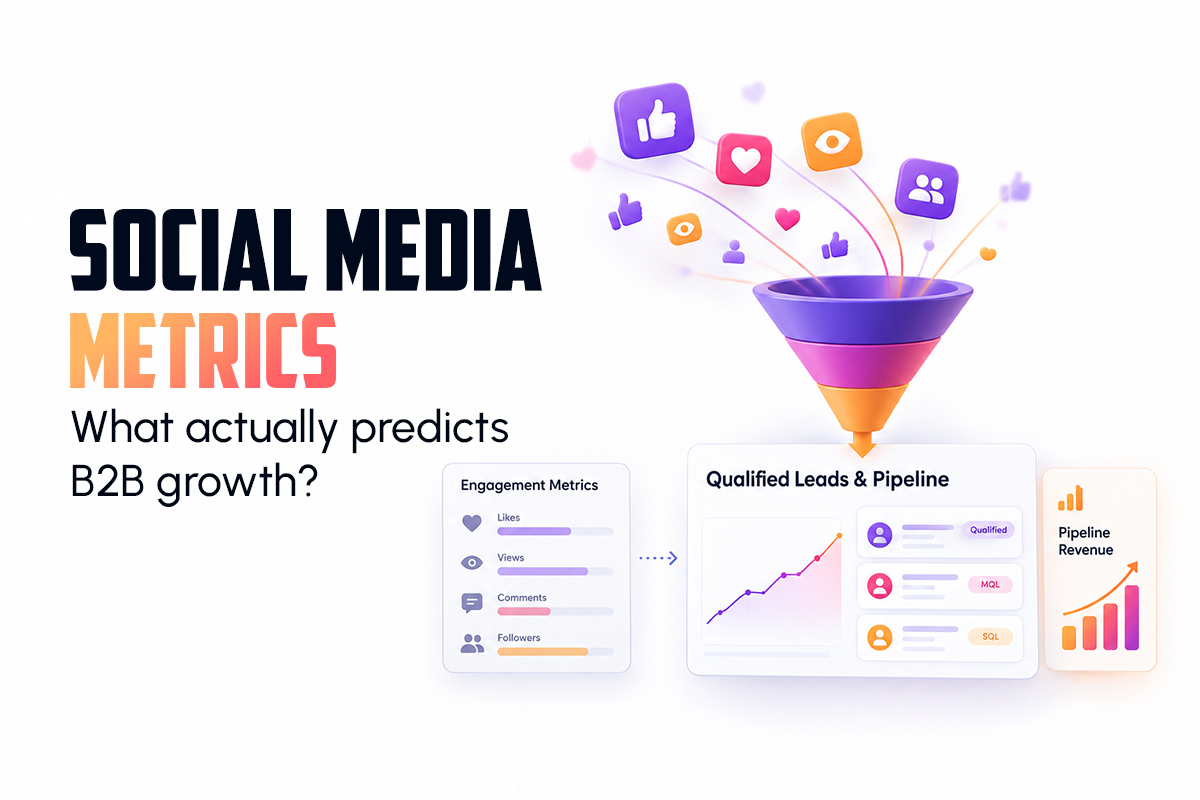
Golden answer: Real social media ROI is not likes or reach, it’s whether social activity is contributing to leads, retention or revenue. Track it against a business metric, not a vanity one or you’ll never know if it’s working.
| What people track | What actually matters |
| Likes, follower count | Saves, shares, DM inquiries |
| Reach | Click-through to site or offer |
| Posting frequency | Conversion from social-sourced traffic |
Social media ROI conversations get a lot clearer once you stop treating every metric as equally important. A viral post that brings zero qualified leads isn’t a win. A quiet post that gets three good DMs from the right people might be.
Most teams I have worked with resist this at first, because vanity numbers feel good in a monthly report. But once a founder sees actual revenue tied to a specific content theme, the reporting conversation changes fast. Suddenly nobody’s asking about reach anymore.
Bottom Line
If your team is stuck in posting mode, busy but not really growing, the fix usually is not a new content calendar. It’s stepping back and asking what the content is supposed to do for the business.
Start small. Pick one platform, get genuinely clear on who you are talking to and build three months of content around actual reader questions instead of trends. Measure what happens. That’s usually enough to prove the point and enough to know if it’s time to bring in outside help to scale it properly.
One caveat worth saying out loud: this approach isn’t fast. If you need a spike in numbers for a board deck next month, this framework is not that lever. Paid media probably is. But if you’re building something you want to still be growing two years from now, slowing down to get positioning and intent right is the unglamorous work that makes everything after it easier. That’s the mindset we bring to every strategy at Neoma Media. We had rather tell a client that upfront than watch them burn a quarter chasing a content calendar that was never going to fix the real problem.