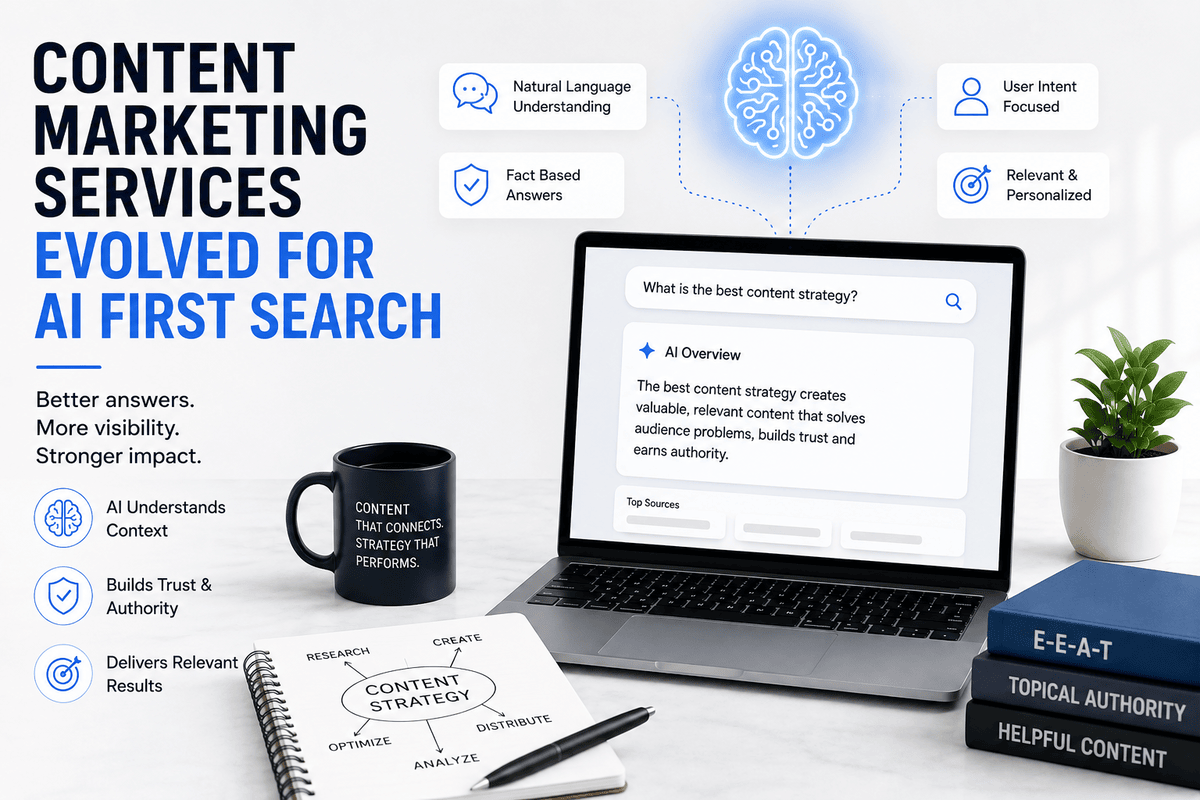
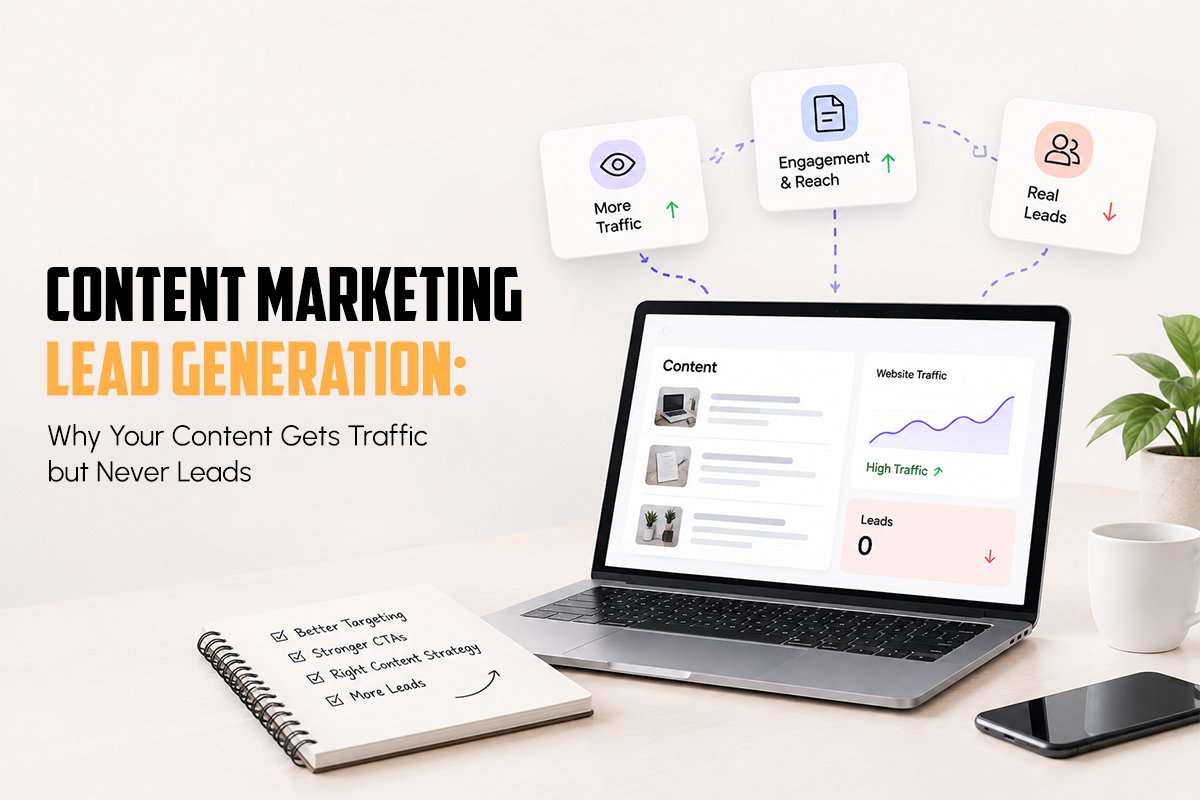
Quick answer: Content marketing services need to evolve for AI first search because AI Overviews and zero-click results now answer many queries on the results page, so ranking alone no longer guarantees visibility. Content must serve people and AI systems: clear answers near the top, original data, self-contained sections, clear headings, real expertise and active monitoring of AI citations.
tl;dr: A content marketing services strategy works differently in an AI first search environment. Businesses now need more than traditional rankings and traffic. They need content that is useful to people, easy for search systems to understand and capable of earning visibility across AI generated answers. Is SEO dead in 2026? No, but it looks very different from two years ago, and treating it the same way is quietly costing businesses traffic every month.
I watched a client’s traffic chart flatten out earlier this year even though nothing about their content had gotten worse. The quality was the same, the publishing schedule had not changed and the team was still putting the same amount of time into research every week.
The only thing that had changed was the search results page itself.
That was when a lot of marketers started realizing this was not a temporary dip. It was a structural shift in how people find answers now, and simply publishing more content was not going to fix it.
Is SEO Dead in 2026 or Just Different?
Let us kill the dramatic headline first. SEO services are not dead, but the definition of what counts as a win has changed.
Google still processes billions of searches and remains a dominant search platform, so writing SEO off completely is a mistake most businesses cannot afford. The bigger change is happening after the search itself.
Organic traffic from Google is down slightly year over year. It is a real decline, but nowhere near the collapse some headlines suggest. The bigger change is where the clicks go after someone searches.
Zero click behaviour has increased significantly, meaning more searches are being answered directly on the results page without anyone clicking through to a website.
That means ranking is still important, but ranking alone is no longer the complete measure of search visibility.
What AI Overviews Actually Do to Content Performance
This is where content performance gets harder to measure using the old approach.
Click through rates for queries showing an AI overview have fallen significantly, based on large scale studies tracking millions of impressions. Even queries without an AI overview have seen organic click through rates fall, suggesting that user behaviour itself is changing rather than the shift being limited to one search feature.
For a deeper look at how this is playing out across industries, this detailed AI SEO statistics breakdown from Semrush provides useful context.
The implication for content teams is simple. Getting found is no longer just about getting a ranking. It is also about becoming part of the answer.
Why AI Visibility Now Matters as Much as Rankings
AI visibility used to be a nice bonus metric that few teams monitored closely. It has now become an important part of search strategy.
Brands earning strong web visibility are more likely to appear as sources within AI generated answers. This creates another layer of visibility beyond traditional search rankings.
Being cited inside an AI answer can matter even when a brand does not hold the number one organic position. Yet many teams still do not actively monitor their AI citation presence.
This changes the question marketers should be asking.
Instead of only asking, “Where do we rank?”
They also need to ask, “Where are we being cited when people ask AI systems the same questions?”
How Content Needs to Change for AI First Search
Content optimization in 2026 means writing for two audiences at once. The human reading the content and the AI system trying to extract a useful answer from it.
This changes how pages should actually be structured.
Content designed for an AI first search environment should include:
- Clear answers near the top of important sections
- Original data and evidence wherever possible
- Self contained sections that make sense without the surrounding page
- Clear headings and logical content hierarchy
- Specific examples instead of vague claims
- Information that demonstrates genuine expertise or first hand experience
Content supported by statistics and original information can also have an advantage in AI search because it gives systems something concrete to reference instead of another generic explanation.
For a deeper look at how AI overviews are affecting traffic and content performance, this AI overview traffic impact analysis from Contently provides additional context.
The goal is not to write for machines at the expense of people. The best content makes the answer easier for both to understand.
Running a Real Content Audit Before You Change Anything
Do not start producing more content simply because traffic has dropped.
First, find out which pages are losing ground and why.
A useful content audit should look at several signals together rather than relying on rankings alone.
What to Actually Check
- Which pages have lost organic clicks over the last six months while rankings remained relatively stable
- Which query types those pages target
- Whether informational pages are being affected differently from commercial or navigational pages
- Whether competitors are appearing as cited sources inside AI Overviews for the same topics
- Which existing pages already have strong authority, data or first hand expertise that can be strengthened
The disconnect between traditional rankings and AI visibility is becoming increasingly important. Ranking well no longer guarantees that a brand will appear where users are actually consuming answers.
That is why a content audit should now examine both traditional search performance and AI visibility.
Building an AI SEO Strategy That Actually Works
An AI SEO strategy is not a replacement for traditional SEO. It builds another layer on top of the fundamentals that already matter.
Keyword research still matters. Search intent still matters. Technical SEO still matters.
The difference is that content now also needs to be structured and supported in a way that makes it easier for AI systems to understand, extract and cite.
The Core Pieces Worth Building Around
- Original data and first hand case studies that competitors cannot easily replicate
- Clear, self contained answer sections near the top of important pages
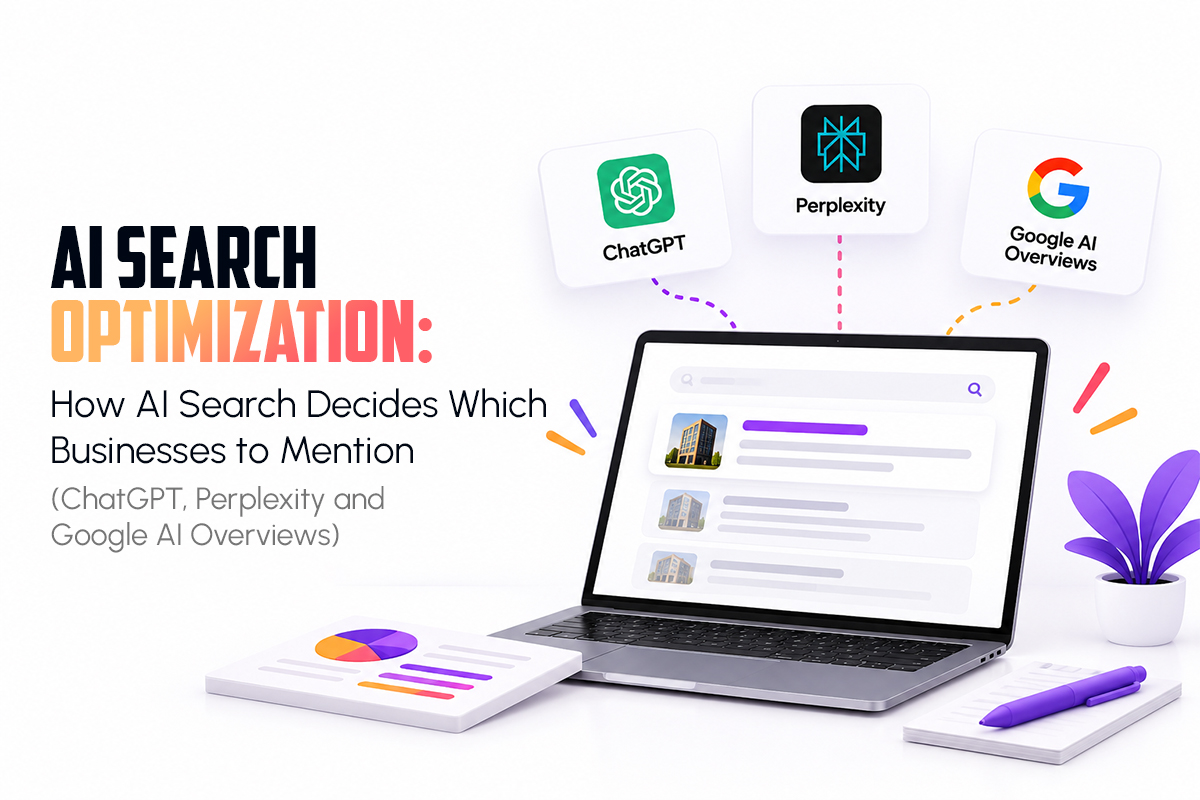
- Active monitoring of citation presence across ChatGPT, Perplexity and Google AI Mode
- Strong internal linking that helps connect related topics and establish context
- A publishing cadence built around depth instead of volume
- Content updates based on actual performance data rather than publishing schedules alone
None of this means abandoning traditional SEO. Teams that chase AI trends while ignoring fundamentals can easily end up with content that ranks nowhere and gets cited nowhere.
Case Study: A Financial Education Platform That Adapted Early
A financial education platform we worked with earlier this year noticed the same flattening traffic pattern many publishers are experiencing.
Instead of doubling their publishing volume, the team went back to its highest traffic explainer pages.
They restructured those pages around answer first formatting and incorporated original survey data from their own user base instead of relying on generic industry statistics.
Over the following four months, citation presence on AI platforms increased noticeably. Traffic on the restructured pages also held steady while similar pages elsewhere on the site continued to decline.
Support requests mentioning those pages also dropped, suggesting that the clearer answer format was helping users find the information they needed faster.
The lesson was not that AI search is unbeatable. It was that better structure and original information can matter more than simply publishing more content.
Why Affordable SEO Still Works When It Is Done Right
Affordable SEO does not mean cheap or low effort. It means putting the budget into the areas most likely to move meaningful business metrics instead of paying for content volume nobody reads.
This shift can actually benefit smaller businesses.
A focused content strategy with strong research, original insights and clear commercial intent can outperform a much larger publishing operation producing generic articles.
A team publishing four genuinely useful pieces a month can create more long-term value than a competitor publishing twenty articles that provide little beyond what already exists online.
The question is no longer, “How much content can we publish?”
It is, “How much useful, defensible and commercially relevant content can we create?”
Choosing the Right Content Marketing Agency and Strategy Partner
A content marketing agency stuck in 2022 thinking will continue optimizing for a search landscape that has changed significantly.
When evaluating a partner, ask how they approach both traditional search and AI visibility.
Ask:
- How do you track AI citation presence?
- How do you measure content performance beyond rankings?
- Can you show an example of a page restructured for AI first search?
- How do you identify which existing content should be updated instead of producing something new?
- How do you connect content performance with actual business outcomes?
If an agency can only talk about rankings, traffic and publishing volume, it may be missing a major part of how search is changing.
Work With Neoma Media on a Strategy Built for How Search Actually Works Now
None of this means starting from scratch.
It means evolving what already works instead of abandoning established SEO fundamentals every time a new search trend appears.
Neoma Media, a content marketing agency, builds content strategy around both layers. Traditional search performance and AI visibility. The goal is to create content that can attract organic traffic, answer real user questions and earn visibility across the search experiences people increasingly use.
If your traffic has flattened without an obvious reason, that may be the first sign that your content strategy needs to evolve.
Reach out to Neoma Media and start with an honest content audit before deciding what actually needs to change.
Frequently Asked Questions
Is SEO Still Worth It in 2026?
Yes, SEO is still worth it in 2026. Its role is evolving from focusing primarily on organic rankings and traffic toward broader search visibility, including AI overviews and other answer engines.
Why Are My Website Rankings Not Changing but Traffic Is Going Down?
Your rankings can remain stable while traffic declines because search behaviour is changing. AI overviews and other zero-click experiences can answer queries directly on the results page, reducing the need for users to visit individual websites.
How to Optimize Content for AI Overviews and ChatGPT?
Start with a clear answer near the top of the page, support important claims with original data, use descriptive headings, create self contained sections and make the content easy for both people and AI systems to understand.
What Is AI Visibility and Why Does It Matter for SEO?
AI visibility measures how often a brand or website appears in AI generated answers across platforms such as Google AI Overviews, ChatGPT and Perplexity. It matters because search visibility increasingly extends beyond traditional organic rankings.
How Much Does a Content Marketing Agency Cost for a Small Business?
The cost varies depending on the scope, strategy, content volume, research requirements and level of execution involved. A focused strategy may require a smaller monthly investment, while full strategy and execution require a larger budget. The priority should be spending on content that can demonstrate meaningful business value rather than simply increasing publishing volume.