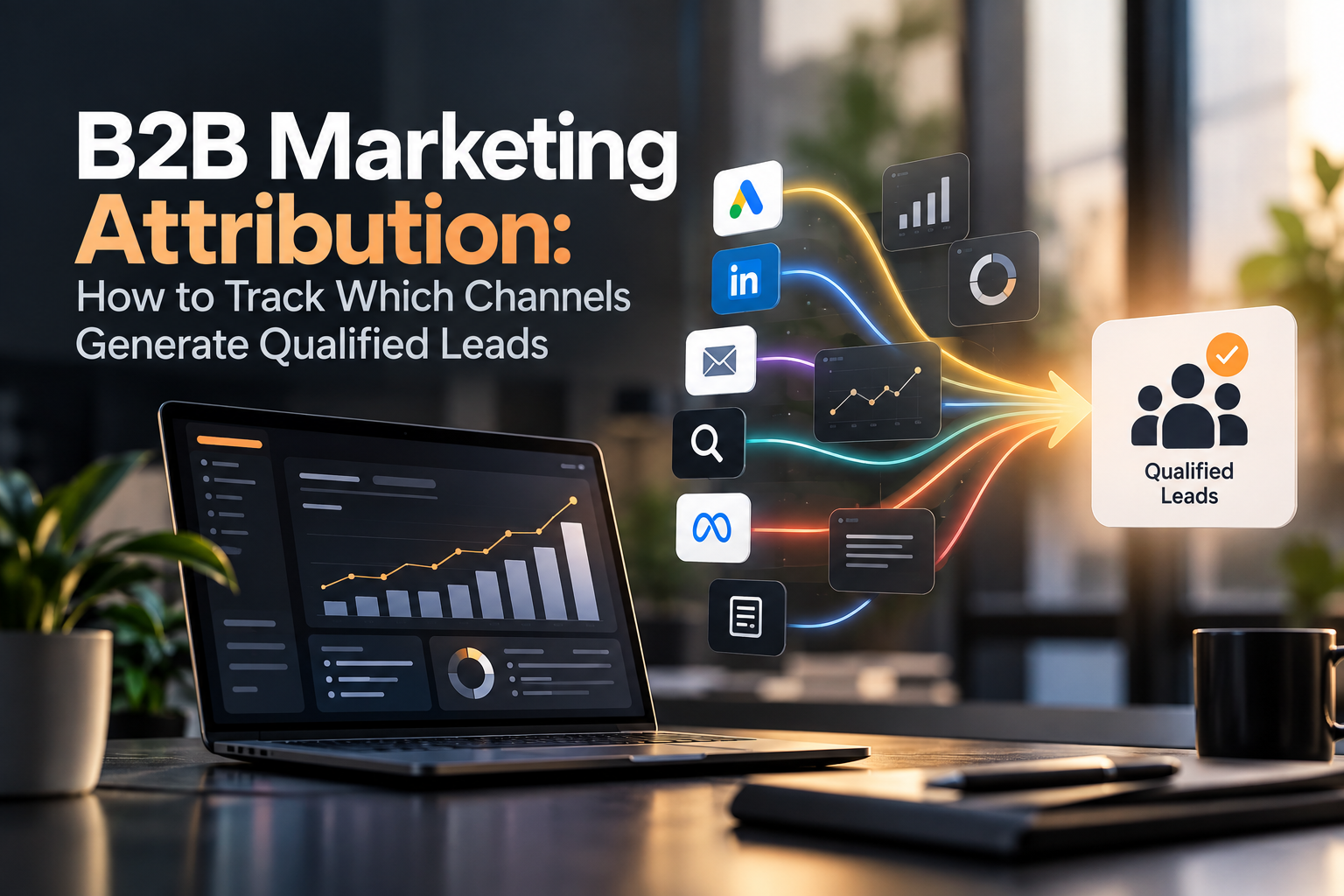
Quick answer: LinkedIn B2B lead generation works when audience targeting, content, conversion paths and measurement operate as one system. Indian founders and CMOs should target decision makers by buying trigger, build authority around buyer problems, create low-friction paths into qualified conversations and measure LinkedIn by pipeline contribution, using paid campaigns to amplify proven organic content.
tl;dr
LinkedIn B2B lead generation works when content, audience targeting, conversion paths and measurement work together. For Indian founders and CMOs, the focus should be on reaching the right decision makers, building authority around their business problems, creating qualified conversations and connecting LinkedIn activity with pipeline outcomes.
The Real B2B Lead Generation Problem on LinkedIn
Most B2B companies in India are not struggling to get LinkedIn followers. They are struggling to convert LinkedIn activity into pipeline. Founders post regularly, marketing teams experiment with content and the engagement numbers look reasonable. But when the quarter ends, nobody can point to a qualified conversation that LinkedIn directly contributed to.
This is the actual problem. Not visibility, but conversion. Not reach, but relevance to the right buyer at the right moment in their decision cycle.
LinkedIn has become the go-to channel for B2B companies in every sector from SaaS to manufacturing to professional services. But viewing it as a broadcasting platform, just another place to push out company news and industry articles, gives you the exact results most companies are getting: moderate awareness and little pipeline contribution.
The framework in this article is based on a different premise. Used strategically, LinkedIn can become a real B2B lead generation engine. But it needs clarity on audience, positioning, content purpose and conversion architecture before any tactic makes sense.
Why LinkedIn Can Become a B2B Growth Channel
The one structural difference between LinkedIn and every other social platform is that professional identity is permanent and core. A decision maker on LinkedIn is not there for entertainment. They are building their professional reputation, staying current with their industry and doing vital research on how to solve business problems.
This is the baseline on which your strategy should be based. Your buyers are on LinkedIn because their work has brought them there. Your role is to be present in that professional environment with credibility and relevance, not promotional noise.
This is of huge importance to Indian B2B firms that want to reach enterprise buyers, mid-market decision makers or sector-specific leaders. Your buyers are looking at several vendors. Many will form an opinion about your company before they ever fill out a contact form. LinkedIn is often where that opinion is built.
The LinkedIn B2B Lead Generation Framework
Effective B2B LinkedIn lead generation does not start with content formats or posting schedules. It starts with four strategic choices: who you are targeting, what authority you need to build, how you convert attention into conversations and how you measure what really matters.
Define Your Target Audience & Buying Triggers
Every successful lead generation strategy begins with a clear definition of who you are trying to reach and that definition needs to be beyond job title and industry. Senior marketing decision makers and founders who are producing real pipeline from LinkedIn are not targeting broadly. They are targeting contextually.
Start by identifying the specific business situation that makes someone a qualified prospect. A CFO at a 200-person manufacturing company is not a prospect simply because of their title. They become a prospect when they are evaluating a new ERP system, dealing with cash flow visibility problems or scaling operations into a new geography. That specific context is called a buying trigger. Your strategy should be built around identifying and responding to it.
LinkedIn’s targeting infrastructure, both organic and paid, allows you to segment by seniority, function, company size, industry and geography with enough precision to matter. By default, Indian B2B companies tend to underutilize this capability by relying on broad audience definitions. You will always do better than a broader, less specific approach when you narrow your audience and speak directly to their particular business situation.
Create Credibility Around Buyer Problems
Once you know your audience, the content question is easy. What does this buyer worry about that you are qualified to answer?
Authority on LinkedIn is not achieved through company announcements or product feature updates. It is built by showing that you understand the problems your buyers are facing. When a CMO at a B2B SaaS company reads a post outlining their exact pipeline quality challenge in specific terms that feel familiar, they do not think about your company first.
They think about the problem. But they remember who described it with precision.
This is the architecture of trust. Your content should operate like a series of informed observations from someone who genuinely understands the buyer’s world. That might be a founder sharing patterns observed across dozens of customer conversations. It might be a commercial leader breaking down how a specific operational challenge plays out in a mid-sized Indian company.
The format matters less than the quality of thinking. Long-form posts, structured observations and frameworks that help buyers think more clearly about their situation will build more authority than any volume of generic industry content.
Turn Attention Into Qualified Conversations
Authority creates attention. But attention on its own does not generate pipeline. The transition from content engagement to qualified conversation requires a deliberate conversion layer that most B2B LinkedIn strategies are missing entirely.
The most effective conversion mechanisms on LinkedIn are low-friction but high-intent. A post that ends with a direct, relevant question invites genuine response. A comment thread where you demonstrate expertise creates a warm context for a direct message. A document or resource that addresses a specific buyer problem shared as native LinkedIn content gives prospects a reason to connect with intent rather than habit.
The goal is to create multiple small moments where a qualified buyer self-selects into a conversation with you. This is fundamentally different from pushing everyone toward a demo request or a contact form. B2B decision makers rarely move that fast on a cold signal. But they will respond to a thoughtful message from someone whose content has already demonstrated understanding of their business context.
Sales and marketing alignment is critical at this stage. The signals coming from LinkedIn profile visits, post saves and comment patterns should be visible to whoever owns the conversation, whether that is the founder, a business development leader or a commercial team. Without that alignment, LinkedIn activity stays in the marketing bucket and never converts to pipeline.
Measure LinkedIn by Business Outcomes
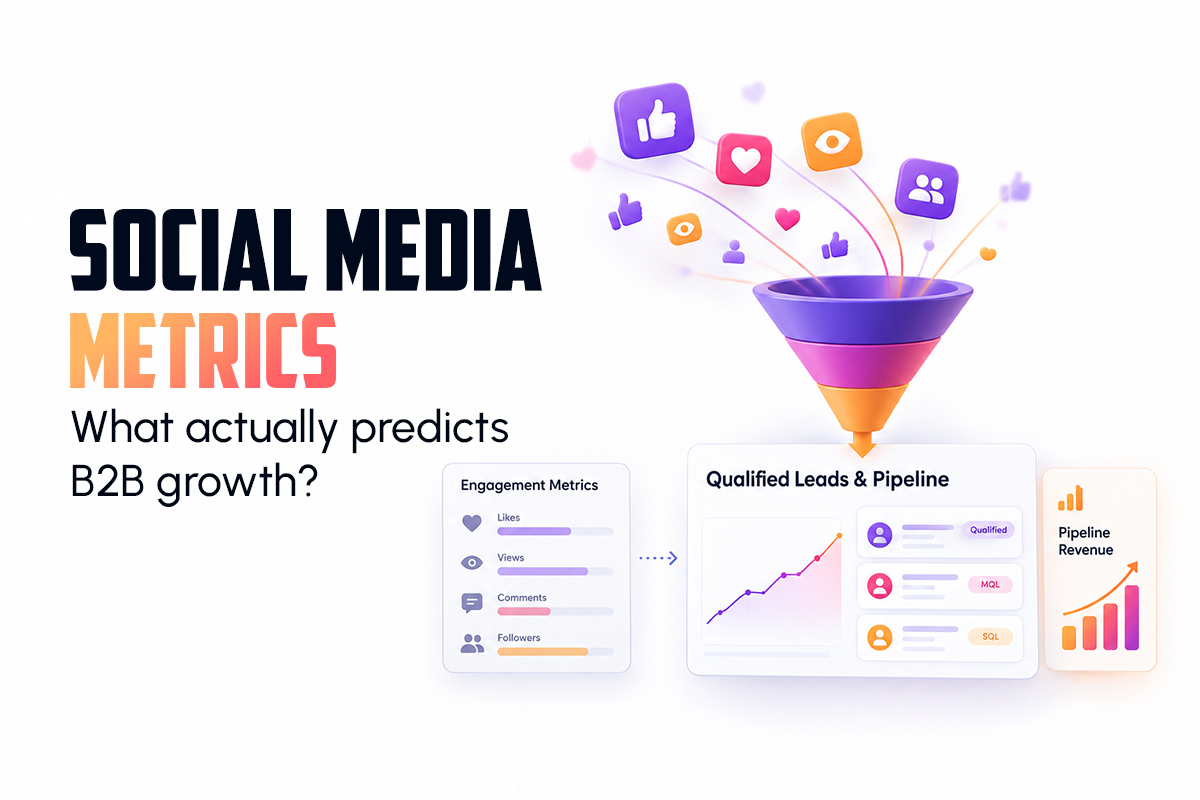
LinkedIn analytics report impressions, engagement rate, follower growth and click-through rates. These numbers are useful to optimize content but they are not the right metrics to judge LinkedIn as a B2B lead generation channel.
The metrics that matter for founders and CMOs are different:
- How many qualified conversations did LinkedIn contribute to this quarter?
- What percentage of active pipeline had a meaningful LinkedIn touchpoint in the last 90 days?
- How many closed deals involved LinkedIn as part of the buyer’s research or relationship-building journey?
These questions require your CRM and LinkedIn activity to be connected, even loosely. Without that connection, you cannot make a credible investment case for LinkedIn and you cannot improve your strategy based on what is actually working.
Where Social Media Management Fits Into the Strategy
Managing a LinkedIn strategy at this level of sophistication is not a part-time function. It requires content strategy, audience intelligence, conversion architecture and performance analysis working together in a coordinated system. Splitting these responsibilities across fragmented internal resources is one of the most common reasons B2B LinkedIn strategies underperform.
Strategy and Content
A professional social media management company does more than produce content on schedule. It defines the narrative architecture: what your brand is known for, what problems it addresses publicly and how each piece of content moves a qualified buyer closer to a conversation. This is the layer where most companies invest too little too late.
Neoma Media approaches social media management services for B2B companies with a commercial lens first. Content decisions are shaped by buyer stage, industry context and pipeline objectives, not by content calendars designed to fill a feed.
Community and Relationship Building
Lead generation on LinkedIn is not a broadcast strategy. The platform rewards real engagement, thoughtful comments and direct conversations. Being present in the places your buyers are thinking out loud creates opportunities to build credibility.
A social media management company that understands B2B can help identify those conversations and put your voice inside of them in a way that builds credibility, not noise.
Measurement & Optimization
Professional social media management services deliver performance analysis that links content activity to business results. This means tracking which content types are driving qualified inbound signals, which audience segments are engaging the most and how LinkedIn activity relates to CRM-tracked pipeline.
Without this layer, optimization decisions are made on instinct rather than evidence.
When Paid Social Should Support LinkedIn Growth
Organic LinkedIn strategy builds authority over time, but it has inherent reach limitations. Social media advertising services on LinkedIn give B2B companies the ability to accelerate audience building, distribute high-value content to precisely targeted decision makers and support specific pipeline objectives with paid amplification.
The most effective use of LinkedIn’s paid capabilities in a B2B context is not to drive direct conversion from cold audiences. It is to put the right content in front of the right buyers at the right moment in their decision process. A well-defined retargeting campaign that reaches buyers who have already engaged with your organic content can help shorten the path between engagement and sales outreach.
Paid and organic should not operate as separate programmes. They should function as a coordinated system where organic content builds trust and paid amplification extends reach at strategic moments. Treating them as independent channels is one of the most common structural errors in B2B LinkedIn investment.
Why LinkedIn Strategies Fail to Generate Qualified Leads
Understanding the failure modes is as important as understanding the framework. Most B2B companies that are dissatisfied with LinkedIn results are making the same structural errors.
Broad Targeting
When your audience definition is too wide, your content has to be generic enough to speak to everyone, which means it resonates with no one. Precise targeting is not just a paid advertising discipline. It shapes every content and conversion decision.
Generic Content
Reposting industry news, sharing motivational quotes or publishing content that could have been written by any company in your sector does not build authority. Buyers do not read content that anyone could have written. They read content that speaks to them and makes them feel seen.
Weak Conversion Paths
Most B2B LinkedIn strategies have content but no conversion architecture. There is no clear next step for a buyer who finds your content compelling. No relevant resource, no low-friction invitation and no follow-up system for warm signals. Without a conversion layer, authority produces appreciation but not pipeline.
Vanity Metrics
Optimizing for likes, follower counts and impression volume without connecting those numbers to pipeline creates a false sense of progress. It also misaligns your team around the wrong objectives. LinkedIn should be measured by its contribution to business development, not by its performance as a broadcast channel.
Building a Repeatable B2B LinkedIn Growth System
The companies that generate consistent results from LinkedIn are not doing anything exotic. They have clarity on four things: who they are targeting and why, what authority they need to build and how, where the conversion moments live in their content ecosystem and how LinkedIn activity connects to pipeline.
That system, once built, becomes repeatable and improvable. The content gets sharper as you learn what resonates with your specific buyer. The conversion mechanisms improve as you identify what prompts self-selection. The paid amplification becomes more precise as you accumulate audience data and understand which segments are most commercially relevant.
The critical insight is that LinkedIn works as a system, not as a series of individual posts. Each content decision, each engagement response and each conversion mechanism should be part of a coordinated strategy that moves buyers along a journey: from awareness, to credibility, to conversation, to pipeline.
Building this system requires the same rigour that B2B companies apply to their sales process or their product roadmap. When it is treated with that level of strategic seriousness, LinkedIn can contribute to commercial outcomes. When it is treated as a content obligation, it is far less likely to deliver meaningful pipeline.
Final Takeaway
LinkedIn is not a shortcut to B2B pipeline. It is a channel that rewards true expertise, precise audience targeting and strategic patience. It is also a direct route for Indian B2B founders and CMOs looking to reach serious decision makers and build the kind of credibility that can support stronger sales conversations.
The investment required is not primarily financial. It is strategic. Define your buyer precisely. Build authority around their actual problems. Create the conversion architecture that turns attention into conversations. Connect LinkedIn activity to the commercial outcomes your business cares about. And measure what actually matters.
That is the framework. Everything else is execution.
Frequently Asked Questions
How fast can you get results from LinkedIn B2B lead generation?
Results vary by market, audience, offer and execution. LinkedIn can generate meaningful conversations before it produces measurable pipeline, so B2B companies should evaluate progress across qualified engagement, conversations, opportunities and revenue contribution rather than relying on a fixed timeline.
What’s the best content format for B2B lead generation on LinkedIn?
There is no single best format. Content that demonstrates a genuine, practical understanding of buyer problems is generally more useful than company news, product promotion or generic industry commentary. Long-form posts, structured observations and practical frameworks can help buyers understand their challenges more clearly.
How should Indian B2B companies measure LinkedIn’s contribution to pipeline?
The most reliable method is to track which active deals and closed accounts had a meaningful LinkedIn interaction, such as content engagement, profile visits or direct message conversations, during the sales process. This requires at minimum a consistent CRM tagging convention and regular communication between marketing and sales teams.
When should a B2B company invest in LinkedIn paid social advertising?
LinkedIn social media advertising services can be useful for amplifying proven organic content to precisely defined audiences or retargeting buyers who have already shown engagement. Paid campaigns should be connected to a clear audience, content and pipeline objective rather than treated as a standalone activity.
What is the difference between social media management and a LinkedIn lead generation strategy?
A social media management company handles activities such as content creation, scheduling, community engagement and channel performance. A LinkedIn lead generation strategy integrates content, audience targeting, conversion design and pipeline measurement into a system connected to commercial objectives. The most effective approach combines both within a clearly defined B2B growth framework.